

Stainless Steel
Pipe Supports and Hangers: The Detail That Decides Longevity
Supports are cheap, unglamorous and routinely under-specified. They also determine whether a well-installed system stays...
stainless-steel
GULF MEP · 04 November 2025 · 2 min read
Fittings are ordered late and cause delays more often than pipe does. What to check on each type before the order goes out.
Pipe is usually ordered accurately because it is measured off drawings. Fittings are estimated, and that is where shortages appear.
Specify the angle and the radius. A long-radius elbow creates less pressure drop and is preferred where flow matters; a short-radius elbow fits tighter spaces. Both exist in the same nominal size, so stating "90 degree elbow" alone is incomplete.
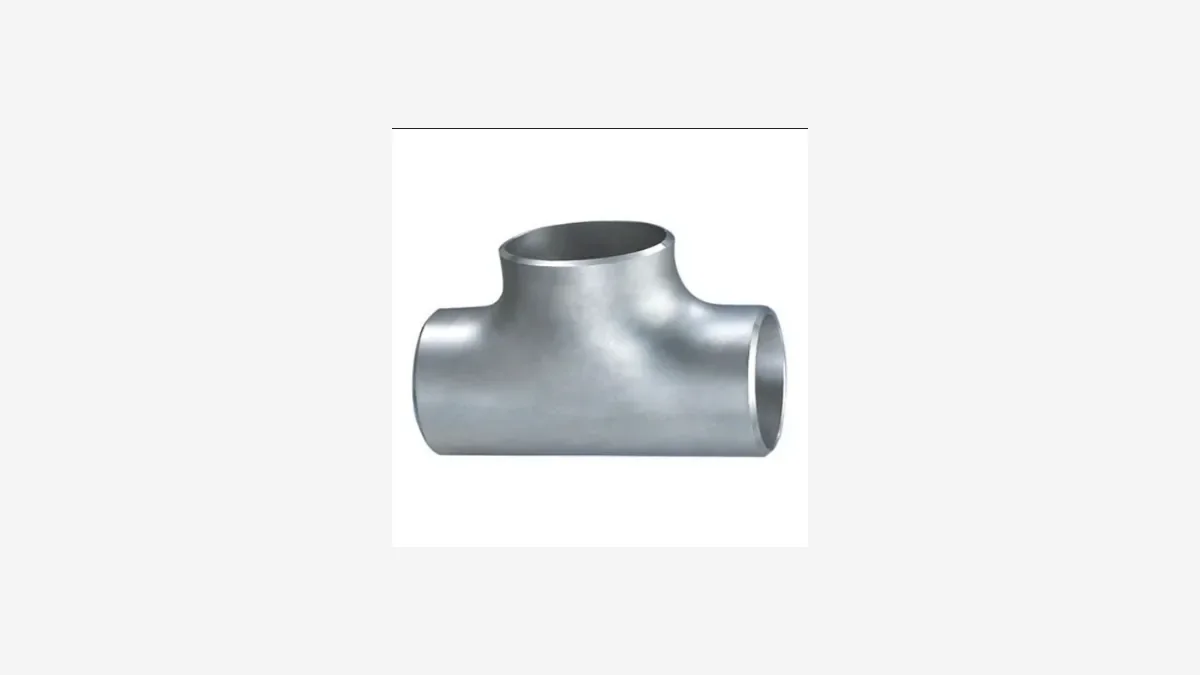
Equal tees have three ports of the same size. Reducing tees have a smaller branch, and the size convention must be written unambiguously — run size first, then branch. Ordering an equal tee where a reducing tee was needed means an extra reducer, an extra joint and a further leak path.
Concentric reducers share a centreline and suit vertical runs. Eccentric reducers keep one side flat, which prevents air pockets in horizontal liquid lines and allows drainage. Substituting one for the other creates trapped air or standing liquid.
Couplings make a permanent joint. Unions and flanges allow disassembly. Place a demountable connection wherever a valve, pump or instrument will eventually need removal — retrofitting one later means cutting the line.
Take off fittings from isometrics rather than estimating a percentage of pipe length, and add a small allowance for site modifications. A missing reducer stops a crew as effectively as a missing pump.
Stainless Steel
Supports are cheap, unglamorous and routinely under-specified. They also determine whether a well-installed system stays...
Stainless Steel
The difference is molybdenum, and it matters most where chlorides are present. In coastal Gulf projects, that is a decis...