

Electrical Cables, Breakers & Distribution Boards
Cable, protection, distribution and wiring accessories for building electrical installations — from the incoming board down to the last socket outlet.
Electrical



Riyadh Cables
1.5 mm² Single-Core Copper Cable
GULF MEP Ref. ELE-0049
- Product typeSingle-core cable
- ConductorCopper

Riyadh Cables
10 mm² Single-Core Copper Cable
GULF MEP Ref. ELE-0053
- Product typeSingle-core cable
- ConductorCopper

Alfanar
12-Way Consumer Distribution Board
GULF MEP Ref. ELE-0076
- Product typeDistribution board
- Ways12


Alfanar
13A Double Switched Socket Outlet
GULF MEP Ref. ELE-0044
- Product typeDouble switched socket outlet
- Rated current13A

Alfanar
13A Fused Connection Unit
GULF MEP Ref. ELE-0045
- Product typeFused connection unit
- Rated current13A


Alfanar
13A Switched Fused Connection Unit
GULF MEP Ref. ELE-0046
- Product typeSwitched fused connection unit
- Rated current13A

Alfanar
13A Switched Socket Outlet
GULF MEP Ref. ELE-0043
- Product typeSwitched socket outlet
- Rated current13A

Riyadh Cables
16 mm² Single-Core Copper Cable
GULF MEP Ref. ELE-0054
- Product typeSingle-core cable
- ConductorCopper

Alfanar
18-Way Consumer Distribution Board
GULF MEP Ref. ELE-0077
- Product typeDistribution board
- Ways18

What this category covers
The electrical package for a building: single-core and multicore copper cables, miniature circuit breakers, residual current devices, moulded case circuit breakers, consumer units, metal and insulated distribution boards, enclosures, switches, socket outlets, wiring accessories, and the contactors, relays and control gear that sit behind them.
GCC supply is 220–240 V single phase and 380–415 V three phase, and — unlike most of the world at that voltage — commonly 60 Hz in Saudi Arabia and parts of the region. Frequency matters for motors, timers and some control gear, so it is worth confirming rather than assuming.
Common applications
Residential and commercial buildings, villa and apartment fit-outs, retail and office refurbishment, labour accommodation, warehouses and light industrial units, plant rooms and pump houses, and site temporary supplies.
What to settle before asking for a price
Cable size against load, length and installation method. A conductor is sized on the current it carries, the volt drop over its length, and how it is installed — a cable bunched in a full conduit in a hot ceiling void carries far less than the same cable clipped in free air. Gulf ambient temperatures make the derating factors more significant than the tables' reference conditions suggest.
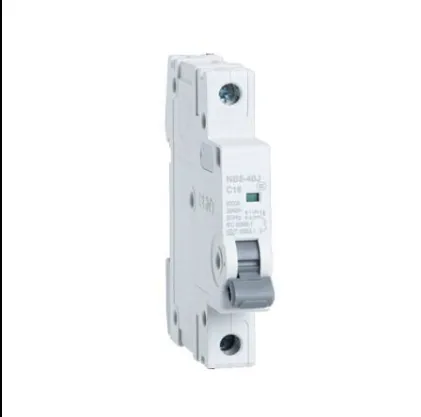
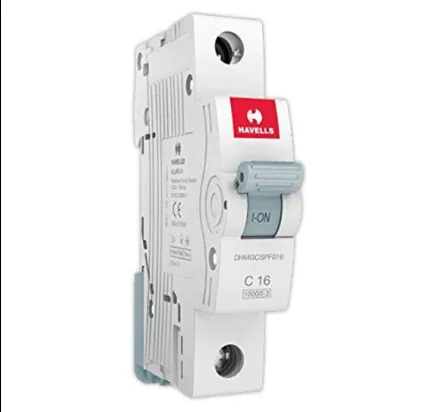
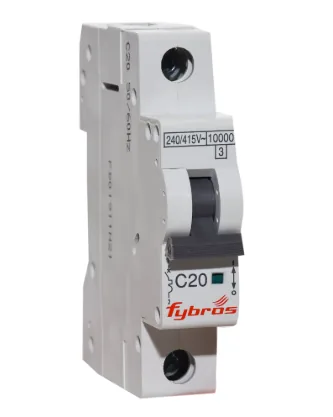
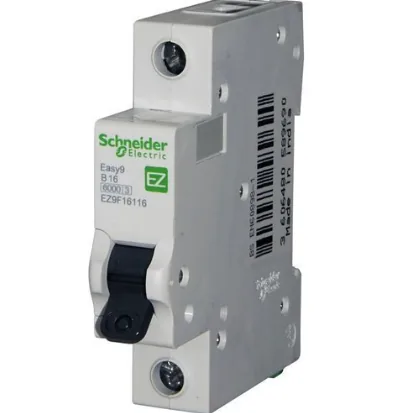
Breaker rating and breaking capacity. These are two different numbers. The rating is the current the breaker carries continuously; the breaking capacity is the fault current it can interrupt safely, and it must be at least the prospective fault current at that point in the installation.
Tripping curve. B, C and D curves respond differently to inrush. Motor and transformer circuits nuisance-trip on a B curve; a lighting circuit rarely needs a D.
RCD sensitivity. 30 mA for additional protection against electric shock on socket and wet-area circuits; 100 mA and 300 mA for fire protection and discrimination upstream. Getting the discrimination wrong takes out a whole board on a single fault.
Enclosure IP rating. A board in a plant room, a car park or an external position needs an ingress rating that suits it — dust is a real factor in this region, not a theoretical one.
Approvals for the destination market. Saudi Arabia, the UAE and the other GCC states each operate conformity schemes for electrical products. Tell us the destination and we will confirm the current position for the item.
Industries we supply
Electrical and MEP contractors, panel builders, developers and main contractors, facilities management, industrial and logistics operators, and retail and hospitality fit-out companies.
Frequently asked questions
How do I size a cable correctly for a GCC installation?
What is the difference between a breaker's rating and its breaking capacity?
Which MCB curve should I specify?
Do you supply distribution boards built up, or as components?
Is the supply frequency 50 Hz or 60 Hz in the Gulf?
Explore Electrical
- Electrical Wires & Cables
- Miniature Circuit Breakers
- Residual Current Circuit Breakers
- Moulded Case Circuit Breakers
- Distribution Boards & Electrical Panels
- Switches, Sockets & Wiring Accessories
- Building Wires & Cables
- Miniature Circuit Breakers — Additional Ratings
- Consumer Distribution Boards
- Metal Distribution Boards & Electrical Enclosures
- Switches & Sockets — Additional Products
- Multicore Copper Cables
- General
- Electrical Accessories & Control Equipment