

Water, Submersible & Booster Pumps
Pumps for water transfer, pressure boosting, drainage, dewatering, process duty and fire protection — selected on duty point rather than nominal size.
Pumps


Booster Pump With Pressure Tank
GULF MEP Ref. PMP-0028
- TypeBooster pump system
- Pressure TankIncluded


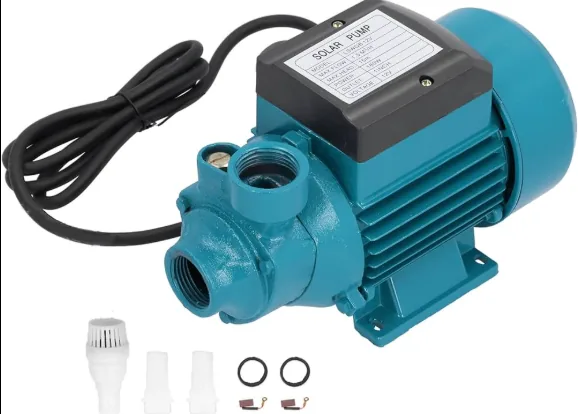


What this category covers
The full range of pumping duties a GCC project encounters: transfer pumps lifting between tanks, submersibles in wells and sumps, booster sets holding outlet pressure, general centrifugal pumps, sewage and drainage pumps handling solids, sump and dewatering pumps for construction sites, multistage pumps for high head, chemical and process pumps for aggressive fluids, fire pumps, and solar-driven pumping for remote sites.
How a pump is actually selected
A pump is defined by its duty point — a flow rate at a total head — and everything else follows from it. Total head is the static lift plus the friction losses through pipe, fittings and valves, and it is the friction that people underestimate. A pump chosen on static lift alone will not deliver at the far end of a long run.
The second number that matters is NPSH available. If the suction conditions cannot supply the head the pump requires at the impeller eye, it cavitates: performance collapses, the impeller erodes and the pump fails early. Suction lift, fluid temperature and suction pipe losses all feed into it, and it is the calculation most often skipped.
Operating close to the best efficiency point matters too. A pump run far to the left or right of its BEP consumes more power, vibrates and wears faster. Oversizing "for safety" is not safe — it pushes the pump off its curve.
What to settle before asking for a price
Flow and head, and how they were derived. Send the figures with the pipe route if you have it.
The fluid. Clean water, grey water, sewage with solids, seawater, or a chemical. This decides the material of the casing, impeller and seals, and whether a solids-handling or open impeller is required.
Temperature and solids content. Both change the selection and the seal arrangement.
Electrical supply. Voltage, phase and frequency — and remember that 60 Hz operation changes a pump's speed and therefore its curve compared with 50 Hz.
Duty and standby. Where a stoppage matters, a duty/standby pair with automatic changeover is the norm rather than a single pump.
Control. Fixed speed, float switch, pressure switch or variable speed drive. VSD control on a booster set holds pressure steadily and avoids the rapid cycling that destroys pumps.
Industries we supply
Building and MEP contractors, water and wastewater operators, agriculture and landscape irrigation, industrial and process plants, construction and civil works, and facilities management.