

Pumps
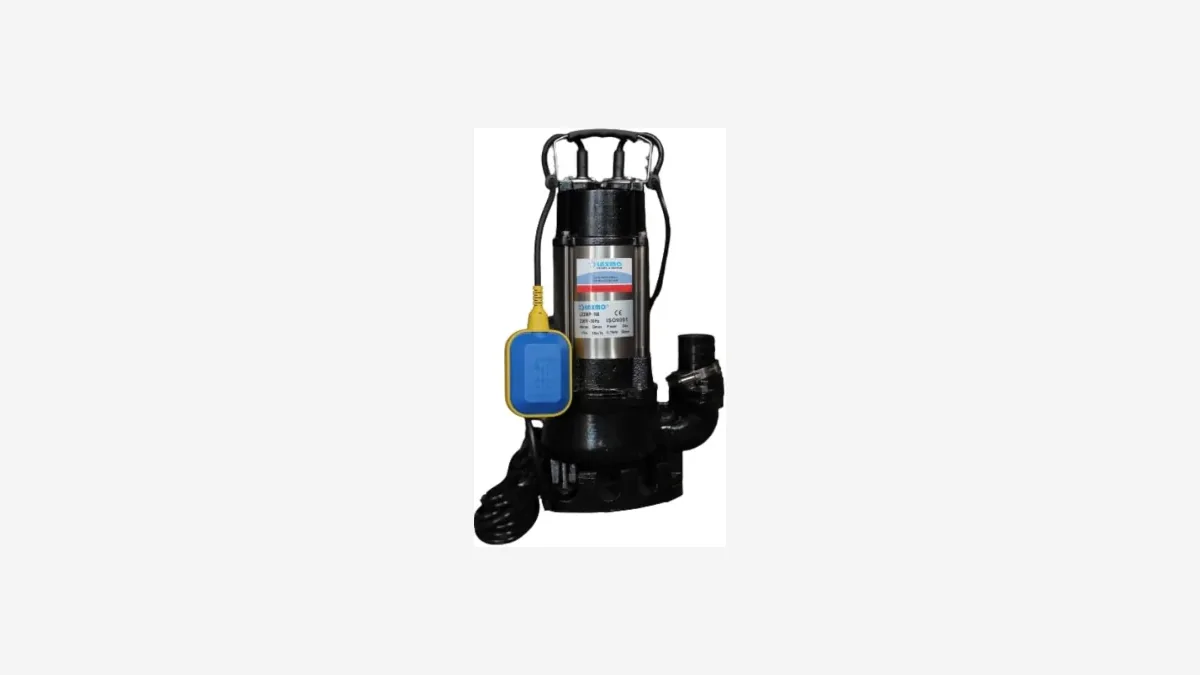
Submersible and Drainage Pumps: Solids Handling and Duty Cycle
Clean-water pumps fail quickly on wastewater. Solids passage, impeller type and switching arrangement determine whether...
pumps
GULF MEP · 30 September 2025 · 2 min read

A pump does not have one flow rate. It has a curve, and where your system sits on that curve decides performance, efficiency and service life.
Flow and head are not independent. As a centrifugal pump delivers more flow, the head it can generate falls. The pump curve plots that relationship.
Head is the height of liquid column the pump can support, expressed in metres. It combines static lift — the vertical distance the water must rise — with friction losses through pipe, fittings and valves. Friction losses grow sharply with flow rate and with smaller pipe diameters, and they are frequently underestimated.
Your system also has a curve: the head it demands at each flow rate. Where the system curve crosses the pump curve is the duty point, and that is where the pump will actually run — regardless of what the nameplate says.
A pump selected far larger than needed runs to the right of its best efficiency point. That means higher power draw, more noise, and in many cases operation outside the range the impeller was designed for. Undersizing is equally unhelpful: the pump never delivers the required flow at the required pressure.
If pressure at the suction falls too low, vapour bubbles form and collapse violently inside the pump, damaging the impeller. The available NPSH on the suction side must exceed the pump's required NPSH with margin. Long, narrow or restricted suction lines are the usual cause of trouble.
Where the datasheet marks flow, head or power as not specified, request the manufacturer's curve before committing.
Pumps
Clean-water pumps fail quickly on wastewater. Solids passage, impeller type and switching arrangement determine whether...
Pumps
Upper floors lose pressure to height, lower floors suffer from too much. How booster sets, pressure zones and variable s...
